Affiliate Disclosure: This article includes affiliate links, and the free workshop mentioned below is one we promote as an affiliate. If you register and later buy something, we may earn a commission at no additional cost to you. Attending the workshop is free. We only suggest resources we think are genuinely helpful.
“Build your audience first.” It’s the advice everyone gives, and it stops most people before they start. Grow to 10,000 followers, nurture an email list, then maybe you’ve earned the right to sell something. By that logic, you need a crowd before you’re allowed to make a dollar.
It’s mostly backwards. Plenty of people sell their first digital product with zero followers and an email list of exactly nobody. Not because they found a trick, but because “audience first” confuses one path to buyers with the only path. Let’s walk through how selling from a standing start actually works, and what you can quietly ignore.
Where the “You Need an Audience” Idea Comes From
The advice isn’t wrong, exactly. An audience helps. If you already have 5,000 engaged followers, launching is easier. The mistake is treating that as a prerequisite rather than an accelerant. It’s a shortcut some people have, not a gate everyone must pass.
Here’s the thing an audience actually gives you: attention you don’t have to pay for or search for. That’s valuable. But it is not the only source of attention on the internet, and it’s not even the fastest one when you’re starting cold.
Borrowing Attention Instead of Building It
When you have no audience, the move is to go where the audience already is. You don’t need to own the crowd, you just need to stand in front of one.
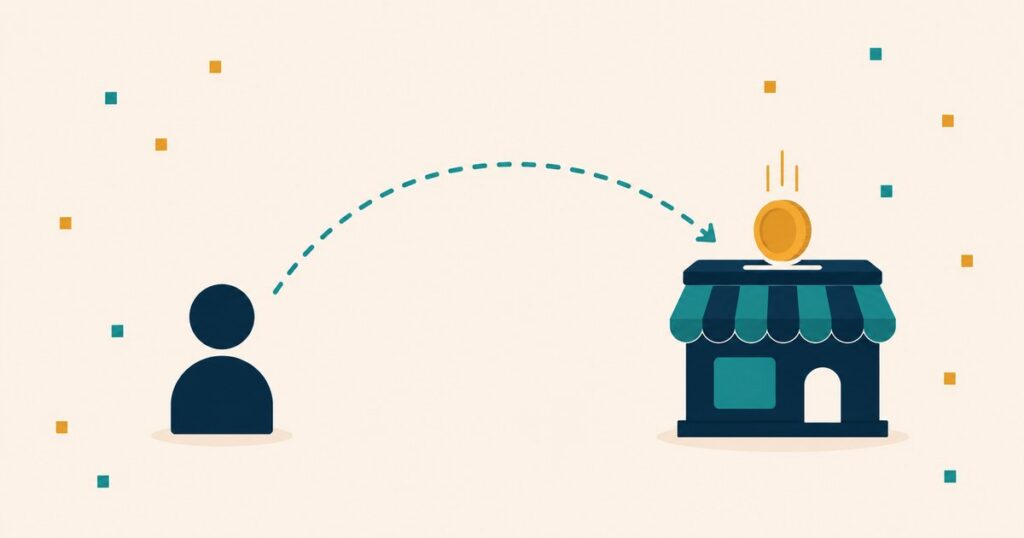
Marketplaces are the obvious version. When you list a product on a platform where millions of people already shop for exactly that kind of thing, the platform’s own traffic does the finding for you. Someone searches, your product appears, they buy. You brought no followers to that sale. The marketplace did.
Search-driven platforms work the same way. A well-made pin or a helpful piece of content can surface in front of people looking for a solution, months after you posted it, with no ongoing effort from you. That’s borrowed attention, and it doesn’t care how many followers you have.
The lesson underneath all of this: you can reach buyers through demand that already exists, instead of manufacturing a following from scratch and hoping it converts later.
You Don’t Need an Email List to Start (But You’ll Want One Soon)
Same logic applies to the email list. A list is genuinely one of the best assets you can build, because it’s the one channel you own, no algorithm between you and the people who said “yes, tell me more.” But you don’t need it on day one to make a sale.
What actually happens for most beginners is the reverse of the usual advice. You make a product. You sell a few copies through borrowed attention. Those buyers become the start of your list. The sales build the audience, not the other way round. Start collecting emails from your very first customer and, a few months in, you’ve got a small list of people who’ve already paid you once, which is worth more than ten thousand followers who never have.
“But I Have No Experience”
This one stops people cold, and it shouldn’t. You don’t need to be an expert, a guru, or a decade into anything. You need to be a few steps ahead of the person you’re helping.
Think about it honestly. Someone who has just spent six months figuring out how to meal-plan for a family of five on a tight budget can absolutely sell a guide to someone at month zero. You learned Notion last spring? You can teach the person who downloaded it last week. The gap between “just figured it out” and “hasn’t started” is exactly the gap people pay to close, and being close to the struggle often makes you a better teacher than the expert who forgot what confusion feels like.
Your product doesn’t have to teach everything. It has to teach one useful thing to one specific person. That’s a bar almost anyone can clear.
The Honest Sequence From Zero
Stripped of the noise, starting from nothing looks like this:
- Pick one specific person and one specific problem you can help with.
- Make a focused product that solves that one problem, small is fine, small is good.
- Put it where people are already searching for that solution.
- Collect the email of everyone who buys, and everyone who almost does.
- Use what you learn from those first sales to make the next product better.
No followers required to begin. No list required to begin. No expertise required to begin. Each of those becomes an asset you build through selling, not a toll you pay before you’re allowed to.
A Concrete Zero-to-First-Sale Example
Abstract advice is easy to nod at and hard to act on, so let’s follow one imaginary person from nothing to their first sale. Call her Maya. She has zero followers, no email list, and a day job. What she does have is a year of experience meal-planning for a family on a genuinely tight grocery budget, worked out through trial and error.
She doesn’t start a blog. She doesn’t try to go viral. She makes one focused thing: a four-week budget meal-plan with a matching shopping list, built for families spending under a set amount per week. It takes her a few evenings. She’s not inventing anything, she’s packaging what she already figured out for herself.
Then she lists it where people are already looking for budget meal plans, a marketplace with its own search traffic. She writes a plain, honest description aimed squarely at the exhausted parent staring at rising grocery bills. Someone searches “budget family meal plan,” finds her product among the results, and buys it. Maya brought no audience to that sale. The platform’s existing demand did the work.
Here’s the part that compounds: she puts a note inside the plan offering a free “20 cheap dinner ideas” printable in exchange for an email. Some buyers take it. Now she has the first names on a list, people who’ve already paid her once and want more. Her second product, when it comes, has a warm audience waiting, built entirely out of the sales themselves. That’s the whole loop, and it started from zero.
Where to Actually List When You’re Starting Cold
“Go where the buyers are” needs a little more detail to be useful. Broadly, you’re choosing between two kinds of home for your product, and each has a trade-off worth understanding.
The first is an established marketplace, a platform where millions already shop for digital goods and printables. The advantage is enormous: the traffic is built in, so a well-optimized listing can sell with no marketing from you at all. The trade-off is that you’re renting that traffic. You compete with everyone else on the platform, you follow their rules, and the customer is somewhat theirs, not yours. It’s the fastest way to a first sale and a fine place to learn.
The second is your own simple storefront, a lightweight shop you control, paired with a free, search-driven channel like Pinterest to feed it visitors. The advantage is ownership: the customer is yours, the margins are better, and nobody can change the rules on you overnight. The trade-off is that you have to bring the traffic yourself, which is a slower start but a stronger long-term position.
For a complete beginner, there’s no wrong answer here, many people start on a marketplace for the quick win and the education, then build their own storefront once they know what sells. What matters is that both routes work without a pre-existing audience. The demand you’re tapping already exists; you’re just standing in front of it.
The one decision that comes before all of this, of course, is what to sell. If you’re still weighing that, it’s worth choosing a product with real earning potential rather than defaulting to whatever’s easiest to make, this breakdown of digital products by income potential is a good place to pick from.
The Catch Nobody Mentions
Everything above is true, and it’s also where people quietly get stuck. “Put it where people are searching” is a sentence that hides a hundred small decisions. Which platform? What do you write so the right person clicks buy? How do you price it so it sells without feeling cheap? How do you turn one product into a second, and a second into something that resembles a real income?
Those aren’t reasons to wait for an audience. They’re just the actual skill of selling, and it’s learnable, much faster with someone showing you the whole map than by piecing it together from scattered advice.
See the Whole Path Laid Out
If starting from zero appeals to you but you’d like to see how the pieces connect before you dive in, there’s a free live workshop I recommend for exactly this situation. It’s run by John Thornhill, who has built digital product businesses for well over a decade, and a lot of what he teaches is aimed squarely at people beginning with no list, no audience, and no track record.
He walks through how the whole thing fits together, choosing what to sell, getting it in front of buyers, and building the simple system that turns first sales into something steady. It’s free to attend, and it’s a far shorter path than guessing.
Don’t wait until you’ve got followers. Don’t wait until the list is big. The people already earning from digital products mostly started exactly where you are now, with nothing but a useful idea and the willingness to learn the selling half. That half is what the workshop is for.
Free to attend. No audience, list, or experience required, that’s rather the point.